
As cannabis-derived products become more mainstream, two compounds frequently capture attention: CBD (cannabidiol) and THC (tetrahydrocannabinol). While both originate from the same plant family, they have distinctly different characteristics, effects, and legal standings. Understanding these differences is crucial for anyone considering cannabis-related products.
This comprehensive guide explores the key distinctions between CBD and THC, helping you make informed decisions based on accurate, educational information.
Table of Contents
What Are CBD and THC?
CBD (Cannabidiol)
CBD is a substance derived from the cannabis plant. It does not alter the mind or cause a “high” unlike the mind-impairing compound tetrahydrocannabinol (THC). CBD is one of over 100 compounds called cannabinoids found in cannabis plants.
THC (Tetrahydrocannabinol)
THC is delta-9-tetrahydrocannabinol, the main psychoactive ingredient in the cannabis plant. It’s what makes you feel “high” when you smoke marijuana. THC is the compound responsible for the intoxicating effects associated with marijuana use.
The Fundamental Difference
One main difference is that THC produces a high while CBD does not. This distinction forms the basis for how these compounds are regulated, marketed, and used by consumers worldwide.
| Aspect | CBD (Cannabidiol) | THC (Tetrahydrocannabinol) |
|---|---|---|
| Psychoactive Effects | Non-psychoactive, no “high” | Psychoactive, produces “high” |
| Source Plants | Hemp (primary), marijuana | Marijuana (primary), some hemp |
| Legal Status (Federal US) | Legal when hemp-derived (≤0.3% THC) | Federally controlled substance |
| Drug Testing | Pure CBD typically won’t trigger tests | Will show up on standard drug tests |
| Common Product Forms | Oils, capsules, topicals, edibles | Flowers, edibles, concentrates, oils |
| Typical Concentrations | Varies widely (5-50mg per serving) | Varies widely (2.5-25mg+ per serving) |
| Individual Responses | Generally well-tolerated | Can vary significantly between users |
| Chemical Structure | C21H30O2 | C21H30O2 (different arrangement) |
| Interaction with Brain | Indirect interaction with receptors | Direct binding to CB1 receptors |
| Common User Goals | Wellness, relaxation support | Recreational, medical applications |
| Product Availability | Widely available in most regions | Restricted to licensed dispensaries |
| Workplace Considerations | Generally acceptable (check policies) | Typically prohibited in most workplaces |
Chemical Structure and How They Work
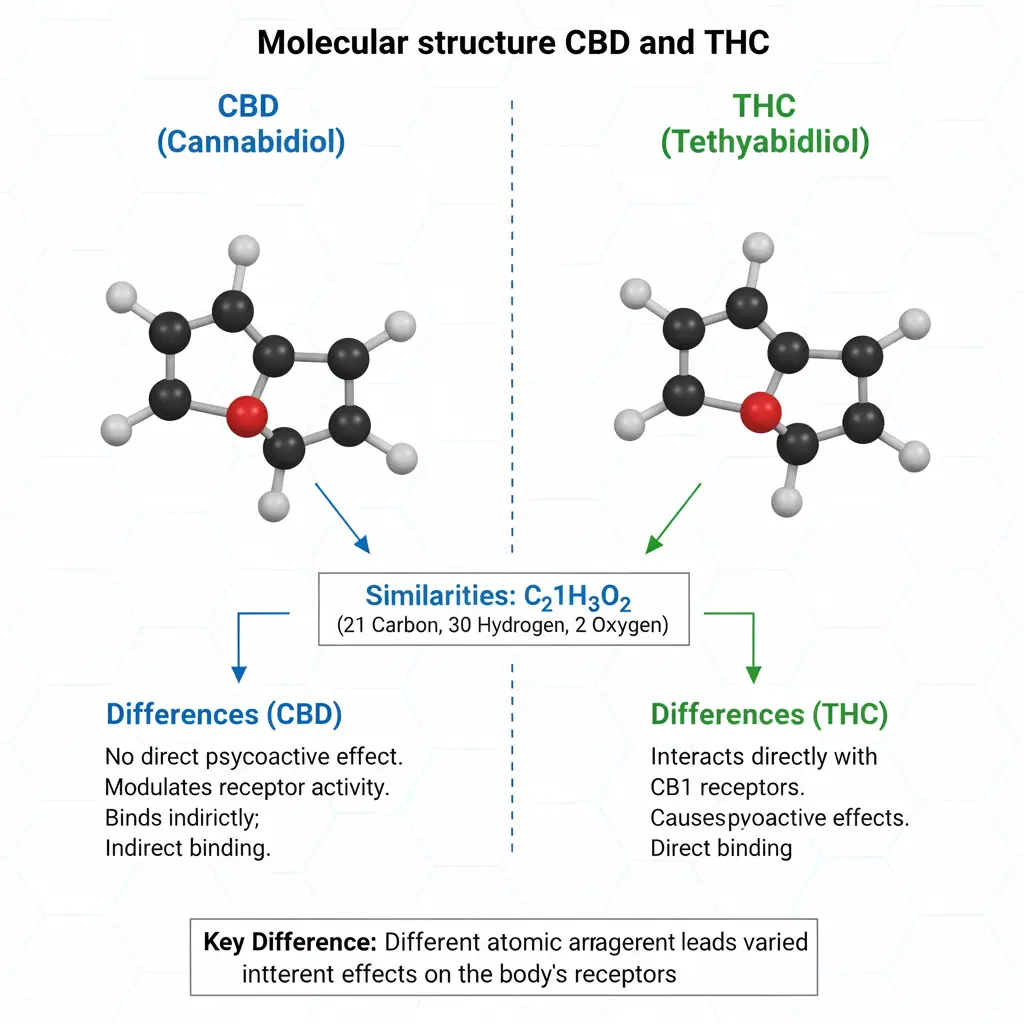
Molecular Similarities and Differences
Both CBD and THC have the same molecular formula (C21H30O2) and contain 21 carbon atoms, 30 hydrogen atoms, and 2 oxygen atoms. However, the arrangement of these atoms differs, leading to completely different effects on the human body.
Endocannabinoid System Interaction
CBD does not get you high or cause significant impairment because it interacts differently with the body’s endocannabinoid system than THC does.
CBD’s Mechanism:
- Interacts indirectly with cannabinoid receptors
- May influence other receptor systems
- Does not bind strongly to CB1 receptors in the brain
THC’s Mechanism:
- Binds directly to CB1 receptors in the brain
- Mimics natural endocannabinoids
- Creates the psychoactive effects associated with marijuana
Effects of CBD and THCon the Body and Mind
CBD Effects Profile
Individual responses to CBD can vary, but commonly reported experiences include:
- Sense of relaxation without intoxication
- No impairment of cognitive function
- No alteration of perception or consciousness
- Generally well-tolerated by most users
Important Note: According to FDA, smoking CBD can make you feel drowsy, sleepy, and irritated. It may also cause gastrointestinal symptoms, highlighting that individual responses can vary.
THC Effects Profile
THC produces various effects that can include:
- Altered perception and consciousness
- Changes in mood and cognition
- Potential impairment of motor skills
- Psychoactive experiences (“high” feeling)
Duration and Intensity:
- Effects typically begin within minutes to hours
- Duration varies by consumption method
- Individual tolerance affects intensity
Legal Status Worldwide
Global Legal Landscape
The legal distinction between CBD and THC varies significantly across jurisdictions worldwide.
United States Federal Law
CBD is legal if it comes from hemp, but not if it comes from cannabis (marijuana), even though it is the exact same molecule. This creates an important legal distinction based on source plant rather than the compound itself.
Hemp-Derived CBD:
- Federally legal under the 2018 Farm Bill
- Must contain 0.3% or less THC
- Available in most states with varying regulations
THC Products:
- Federally classified as controlled substances
- Legal only in states with specific legislation
- Subject to strict regulations and licensing
International Considerations
Different countries have developed their own approaches:
- European Union: CBD generally permitted with THC limits
- Canada: Both CBD and THC legal under federal cannabis laws
- Australia: CBD available through prescription or pharmacy
Travel Warning: Legal status can change dramatically between jurisdictions. Always research local laws before traveling with any cannabis-derived products.
Choosing Between CBD and THC Products
CBD May Be Preferred For:
- Those seeking non-intoxicating options
- Workplace-friendly alternatives
- General wellness applications
- First-time cannabis product users
THC May Be Preferred For:
- Those in jurisdictions where it’s legal
- Users comfortable with psychoactive effects
- Recreational applications
- Specific medical applications (where legal)
Legal and Practical Considerations
- Research local laws and regulations
- Consider workplace policies
- Evaluate drug testing requirements
- Assess personal comfort with effects
Key Takeaways
- Fundamental Difference: CBD is non-psychoactive while THC produces intoxicating effects
- Legal Status: In states where recreational marijuana is legal, the list of cannabis-derived products greatly expands to include CBD with much higher THC content than 0.3%
- Drug Testing: Pure CBD shouldn’t trigger tests, but product contamination with THC can cause positive results
- Individual Responses: Effects vary significantly between individuals for both compounds
- Quality Matters: Third-party testing and reputable sources are crucial for both CBD and THC products
- Legal Complexity: Regulations vary dramatically by location and continue to evolve
- Source Plant Significance: Legal status often depends on whether products are hemp-derived or marijuana-derived